
Stress Trio: How Physical, Nutritional, and Emotional Stress Drive Cortisol Imbalance.
- Roberto Folleri
- Oct 25, 2024
- 3 min read
Learn the hidden connections between stress, cortisol, and your body’s health—from belly fat to insomnia and beyond.
Stress and cortisol, cortisol circadian rhythm, vagus nerve health, hormonal balance, mental clarity.

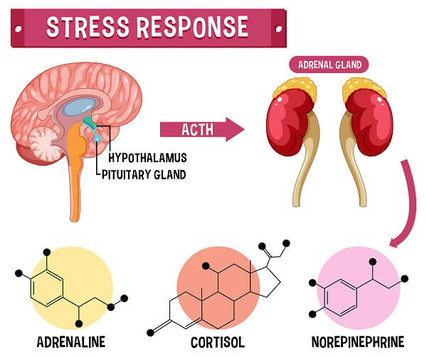
Stress is everywhere and it's no longer just mental. Physical, chemical, and emotional stress each strain the body in different ways, but all lead to one shared hormonal outcome: namely cortisol our body’s main stress hormone.
But when we experience chronic stress across these three areas, our body can’t keep cortisol levels in check, causing a rollercoaster in its natural circadian rhythm, a smooth daily cycle, leading to a cascade of health problems.

What is Cortisol and Why It Matters.
Cortisol, produced by the adrenal glands, is known as the “stress hormone” for a reason. Under normal circumstances, cortisol helps regulate metabolism, blood sugar, and inflammation, peaking in the morning to wake us up and tapering off at night to promote sleep. However, when stress is persistent and unregulated, cortisol’s rhythm goes out of sync.



“It’s not stress that kills us; it is our reaction to it.” — Hans Selye, often called the "father of stress research," emphasizes the importance of how we manage stress rather than stress itself as a cause of health issues.
The Impact of Disrupted Cortisol.
The Impact of Disrupted Cortisol
When cortisol levels don’t follow their normal cycle, the body’s “balance” begins to suffer. Chronic high cortisol can:
Increase belly fat: Cortisol boosts blood sugar and insulin, promoting fat storage, particularly in the abdominal area.
Disrupt sleep: When cortisol stays high into the evening, insomnia becomes common, leading to daytime fatigue.
Affect mental health: Elevated cortisol is linked to anxiety, brain fog, and other cognitive issues, impacting our ability to stay calm and focused.
Lower libido: Both men and women see a decrease in sex drive with chronic high cortisol. For women, this can also mean hormonal imbalances, increasing the risk of PCOS, endometriosis, and infertility.
When it comes to cortisol’s impact, I’m not just speaking from research; I’ve experienced these symptoms firsthand. There was a time when belly fat seemed impossible to lose, no matter how much I focused on diet and exercise. My sleep was all over the place, leading to that foggy brain feeling day after day. And stress? It started to feel like a constant, just below the surface.
For me, learning how cortisol ties into every part of our health—body, mind, hormones—felt like a revelation. It’s one of the reasons I’m so passionate about sharing this. Balancing cortisol goes beyond managing stress; it’s about resetting how our body responds to stress altogether, and ultimately finding more freedom and health in how we live.
How Stress Affects the Vagus Nerve and Gut Health.
The vagus nerve, the main component of the parasympathetic nervous system, is responsible for “rest-and-digest” functions. High cortisol levels can suppress vagal tone, impacting digestion, heart rate, and even the production of neurotransmitters like serotonin and dopamine, essential for regulating mood and emotional resilience.
The gut’s microbiome also suffers, as high cortisol levels lead to an environment that favors pathogenic bacteria, further impacting neurotransmitter production and emotional regulation.

Bringing It All Together.
So, what’s the solution? It’s not a single fix but rather a multi-level approach:
Osteopathic therapy: Techniques like craniosacral therapy and visceral manipulation can help release physical tension and improve vagal tone.
Diaphragmatic breathing: Conscious breathing reduces cortisol and increases parasympathetic activation, helping balance the stress response.
Anti-inflammatory diet: A nutritional plan rich in anti-inflammatory foods will not only support balanced cortisol but also nourish the microbiome.
Cold showers, red and infrared light therapy, hydrogen water: Cold exposure helps regulate stress responses by training your resilience, while red and infrared light work on a cellular level to reduce inflammation and boost energy. H20 water with its antioxidant properties help combat oxidative stress, providing an internal shield against cortisol dysregulation.
Conclusion
By addressing each level, you’re not just tackling symptoms but working toward a strategic approach to holistic health—helping your body, mind, and nervous system align in harmony.
In Active Osteopathy, the focus is on holistic health, addressing each level of dysfunction to not only alleviate symptoms but also promote overall well-being. By aligning the body, mind, and nervous system, we create a harmonious balance essential for sustainable health.
This integrated approach supports resilience against stress and enhances recovery, highlighting the importance of treating root causes for optimal outcomes.