
The Foot's Role in Global Stability and Strength through the 'Short Foot Exercise'!"
- Roberto Folleri
- Sep 19, 2023
- 10 min read
Updated: Sep 20, 2023

Introduction:
In the intricate world of human anatomy, the foot often takes center stage as a masterpiece of complexity, serving as a fundamental pillar of support during standing, dynamically adapting with each step, and even acting as a spring to store and release energy. However, within this remarkable structure lies a concealed treasure trove – the often-overlooked intrinsic foot muscles. I, as an experienced osteopath with a substantial background in the field, including working closely with the dancers of the Prague National Theatre, have witnessed firsthand the incredible importance of these unsung heroes. My extensive experience has led me to believe that the human foot is not merely a foundation for our body but a new paradigm for understanding global stability and strength. This article delves into the fascinating evolution of the foot, explores the concept of the "foot core," and presents advanced techniques and insights, all aimed at revolutionizing our perception of foot function and care. Join me on this journey to unlock the potential of your feet, from the ground up.
The human foot didn't just happen by chance
The human foot is a masterpiece of complexity, serving various vital functions, from providing a stable base during standing to adapting dynamically during walking. It even acts as a spring, storing and releasing energy with each step.
Yet, hidden within this intricate structure are the often-neglected intrinsic foot muscles. These unsung heroes play a pivotal role in controlling the foot's arch, crucial for its stability and function.
As we delve into the foot's evolutionary history, we uncover the fascinating development of its arch in response to increased demands, particularly running. Much like the core muscles in our trunk region, these intrinsic foot muscles constitute the "foot core."
While core stability has long been a hot topic in clinical and athletic circles, it's typically associated with the lumbopelvic-hip complex. However, we believe it's time to extend this concept to an often-overlooked area: the arch of the foot.
Just as the lumbopelvic core comprises both local stabilizers and global movers, the arch of the foot follows a similar pattern. Local stabilizers, represented by the intrinsic foot muscles, play a key role in arch stability. Meanwhile, global movers, muscles originating in the lower leg and crossing the ankle, contribute both mobility and arch support.
In essence, the four layers of intrinsic muscles control arch deformation with each step. When these muscles aren't functioning optimally, the foot's foundation becomes unstable, leading to abnormal foot movement patterns and potential issues like plantar fasciitis.
Despite the significance of arch musculature in common foot injuries, it's often overlooked in treatment guidelines. That's why we're introducing the concept of the "foot core." We explore its evolution, subsystems, assessment, and treatment, aiming to revolutionize how we perceive foot function and care.
The Human Foot's Evolutionary Journey
The human foot evolved from an ape-like structure, adapting for terrestrial bipedal locomotion. Key features include a permanently adducted hallux, shortened lateral digits, realignment of tarsal bones, and the development of a well-defined medial longitudinal arch. This arch's presence in early Homo species, like Homo erectus, marked a shift toward modern foot structure designed for endurance running.
Endurance running placed new demands on the foot, emphasizing "leg springs" like the Achilles tendon and plantar aponeurosis, which are absent in apes. Running also subjected the foot to greater forces, requiring strong intrinsic foot muscles. These muscles play a crucial role in controlling balance during single-leg support, especially during running, and aid in load distribution.
The evolution of the human foot, shaped by the demands of bipedalism and endurance running, highlights the importance of its intrinsic muscles in supporting a mobile and adaptable structure.
The Foot Core System Demystified
Much like the lumbopelvic-hip core, the foot core system consists of passive, active, and neural subsystems that collectively control motion and stability. The passive subsystem includes bones, ligaments, and joint capsules, maintaining the foot's various arches.
The active subsystem comprises intrinsic foot muscles (local stabilizers) and extrinsic foot muscles (global movers). Intrinsic muscles, especially the plantar intrinsic muscles, play a vital role in supporting the arches and dynamically adapting to loads during activities. Extrinsic muscles, originating in the lower leg, control foot motion and affect passive structures like the plantar fascia.
This parallel to lumbopelvic core stability underlines the importance of coordinated control and adequate strength within the foot core. These concepts provide valuable insights into foot function, assessment, and treatment.
Neural Subsystem of the Foot Core: Sensory Significance
The foot's neural subsystem involves sensory receptors within the plantar fascia, ligaments, joint capsules, muscles, and tendons. While plantar sensation significantly influences gait and balance, it's primarily attributed to plantar cutaneous receptors. The sensory role of intrinsic foot muscles is less understood.
Intrinsic muscles lack mechanical advantage for large joint motions. However, their positioning allows them to provide immediate sensory information, particularly through stretch responses, about changes in foot posture. Training can potentially modify their sensitivity to foot dome deformation. Muscular fatigue can affect joint position sense, suggesting that these muscles offer not only mechanical support but also sensory information about foot posture, akin to how lumbopelvic muscles relate to trunk posture.
Kelly Starrett, Physical Therapist and Author:
"Your feet are your foundation. If your foundation is unstable, everything above it is compromised. Proper foot stability and strength are fundamental not only for athletic performance but also for everyday function and injury prevention."
Dr. Emily Splichal, Podiatrist and Functional Movement Expert:
"Foot health is fundamental to overall well-being. By understanding the importance of foot function and implementing proper foot training techniques, we can improve not only our foot health but also our overall posture, mobility, and performance. Investing in the health of our feet is an investment in our overall quality of life."
Foot Core Assessment: A Closer Look
When it comes to checking out the muscles deep in your feet, it's like they've been playing hide-and-seek in the world of medical research. They rarely get the attention they deserve, except in specific cases like diabetic neuropathy or claw toes. But even when they do, the focus tends to be on their role in toe strength rather than the critical job they do in supporting your foot's arches.
In my years of practice as an osteopath, I've had the privilege of closely observing the intricacies of foot health, from children to adults, but only one out of ten patients that enter my sudio make a positive result in the foot assessment.
Imagine a test where you stand on one foot, trying to keep your arch in its natural position, and it's not about how strong your toes are. This "intrinsic foot muscle test" does just that. It's like evaluating the foundation of a house instead of how good the roof is. This test shows promise in assessing your foot's core strength, but it still needs some fine-tuning.
But here's the kicker: there's no gold standard for checking how well these deep foot muscles are doing their job. So, while we're making progress, there's still more to discover in this hidden world beneath your feet.
Advanced Techniques for Training Your Foot's Core
Traditionally, exercises to strengthen the plantar intrinsic foot muscles mainly focused on toe flexion exercises like towel curls and marble pick-ups. While these exercises indeed work the foot muscles, they also activate other muscles like the flexor hallucis longus and flexor digitorum longus. Recently, the "short foot exercise" has gained attention for its ability to isolate the contraction of the plantar intrinsic muscles, effectively putting your foot's core to work.
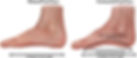
In the short foot exercise, the goal is to shorten the foot by engaging the plantar intrinsic muscles. This helps elevate the medial longitudinal arch while keeping the toes neither flexed nor extended – a bit like your foot's own "dome."
This exercise aligns with the concept of establishing control before building capacity, similar to how the abdominal bracing maneuver lays the foundation for lumbopelvic core stability exercises.
During this exercise, the abductor hallucis, flexor digitorum brevis, and quadratus plantae muscles show significant electromyography (EMG) activity, especially as postural demands increase. This exercise can be adapted from sitting to bipedal and even unipedal positions, eventually incorporating functional activities like squats and single-leg hops.
Training your foot's core through short foot exercises has shown promising results in enhancing foot function and balance. For instance, in healthy individuals, a 4-week short foot exercise program reduced arch collapse, improved balance, and even increased great toe flexion strength and muscle cross-sectional area. In chronic ankle instability patients, similar training led to improved self-reported function.
These exercises offer a structured approach to enhancing foot core function, and ongoing research continues to explore even more effective interventions.
Title: "Effect of Short Foot Exercises on Foot Posture, Rearfoot Kinematics, and Postural Control in Healthy Adults"
Authors: Halabchi F, Mazaheri R, Mirshahi M, Abbasian L
Published: Journal of Foot and Ankle Research, 2013
Summary: This study investigated the impact of short foot exercises on foot posture, rearfoot kinematics, and postural control in healthy adults. The research suggested that short foot exercises can positively influence foot posture and stability.
Title: "Immediate Changes in Posture, Strength, and the Gastrocnemius Muscle Length After Short Foot Exercise in Subjects With Gastrocnemius Equinus: A Cross-Sectional Study"
Authors: Jung DY, Kim MH, Koh EK, Kwon OY, Cynn HS, Lee WH
Published: International Journal of Sports Physical Therapy, 2015
Summary: This study explored the immediate effects of short foot exercises on posture, strength, and gastrocnemius muscle length in individuals with gastrocnemius equinus. The findings suggested that short foot exercises can lead to immediate changes in these parameters.
Enhancing Foot Core Strength with Barefoot and Minimal Footwear Training
Barefoot and minimal footwear walking or running can serve as valuable tools to fortify the foot core system. A study by Robbins and Hanna revealed that after four months of barefoot activity, there was a notable reduction in foot length, which indirectly reflects foot strengthening by indicating an arch elevation. Muscle size directly correlates with muscle strength, and a study by Brüggemann et al further demonstrated this principle. They measured the cross-sectional area of core foot muscles in runners who trained for five months in shoes without arch and rearfoot support, reporting significant increases in muscle size. However, more research is necessary to establish whether these strength and size gains in foot core muscles translate to reduced running-related injuries.
Another advantage of going completely barefoot is the heightened sensory input received from the plantar surface of the foot. Sensory input has long been recognized for its significance in both postural stability and dynamic gait patterns. For instance, studies have shown that standing barefoot substantially improves postural stability compared to wearing thin socks. This implies that thin socks may filter out essential sensory input crucial for static stability. Moreover, in research involving single-leg landings, dynamic stability was notably enhanced when landing barefoot in comparison to minimal or traditional running shoes. This improvement in stability further increased as footwear support decreased. These studies underscore the potential importance of sensory input in foot function. Therefore, engaging in barefoot activities and care, such as foot mobilization and rolling, especially in safe environments, can contribute to enhancing foot function.
One clear takeaway is that a stronger foot equates to a healthier foot. Therefore, we advocate for a shift in the way we approach foot treatment. Current clinical guidelines often recommend foot orthotic devices for conditions like heel pain and plantar fasciitis but neglect the importance of foot strengthening. While temporary support may be necessary during the initial phase of an injury, it should be promptly replaced with a strengthening program, similar to how we treat other parts of the body.
Consequently, we believe there should be more emphasis on understanding static and dynamic foot core function in rehabilitation programs, and these concepts can extend to organized fitness programs as well. Our feet are inherently designed to possess the strength for unsupported, endurance walking, and running. Unfortunately, the current standard of care primarily involves adding permanent support to the foot rather than strengthening the foot core.
We propose the idea of dedicating more attention to foot health, possibly even considering a "New Era of the Foot." Such focused attention on this often-neglected yet crucial part of our body could help raise awareness about the remarkable function of our feet and their untapped potential for improvement.
Key Findings:
The foot core system comprises interconnected subsystems that provide vital sensory input and functional stability for adapting to changing demands during static and dynamic activities, resembling the lumbopelvic core system.
The plantar intrinsic foot muscles within the active and neural subsystems play pivotal roles in the foot core system, serving as local stabilizers and direct sensors of foot deformation.
Assessing the foot core system can offer valuable clinical insights into the foot's ability to handle shifting functional requirements.
Foot core training commences with targeting the plantar intrinsic muscles using the short foot exercise, akin to the abdominal brace maneuver, to enhance both the capacity and control of the foot core system.
Here's how to perform the "short foot exercise"
1. Begin in a seated or standing position: You can start this exercise while sitting in a chair or standing, whichever is more comfortable for you.
2. Place your feet flat on the ground: Ensure that your feet are firmly planted on the floor, hip-width apart.
3. Focus on your toes: Imagine that you're trying to make your foot "shorter" by engaging the muscles on the bottom of your foot.
4. Gently contract your arch: Without curling your toes or lifting them off the ground, attempt to create a slight arch in your foot by pressing your toes downward against the floor. It should feel like you're trying to make a small dome with your foot.
5. Hold the contraction: Maintain this position for about 5-10 seconds, ensuring that you feel the muscles on the bottom of your foot working.
6. Release and relax: After the hold, release the contraction and allow your foot to return to its normal position.
7. Repeat: Perform this exercise for about 10-15 repetitions for each foot. You can gradually increase the duration and repetitions as your foot muscles become stronger.
8. Foot care: Once you finish the training session make sure to roll the bottom of your foot with a massage ball or a massage tool.
Explore the World of Foot Health with NABOSO® Toolshttps://www.activeosteopathy.cz/e-shop
Thank you for joining me on this enlightening journey through the fascinating world of foot health and the power of the foot core. If you're as intrigued as I am about unlocking the potential of your feet and enhancing your overall well-being, I invite you to take the next step.
Visit our e-shop and discover the innovative Naboso Tools for foot care. From textured insoles designed to stimulate your foot's sensory receptors to exercise aids that can help you strengthen your foot core, we offer a range of products to support your journey to healthier, happier feet.
Your feet are your foundation, and caring for them is an investment in your mobility and overall health. Whether you're an athlete looking to improve performance, someone seeking relief from foot pain, or simply curious about optimizing your foot health, our Naboso Tools have something for everyone.
Take the first step towards healthier, more balanced feet today. Visit our e-shop and explore the transformative possibilities that Naboso Tools can offer. Your feet will thank you.